"What Do I Own?": From the Contract of Karma to the Covenant of Grace
Snehith | from Philosophy · Religion | 3 min read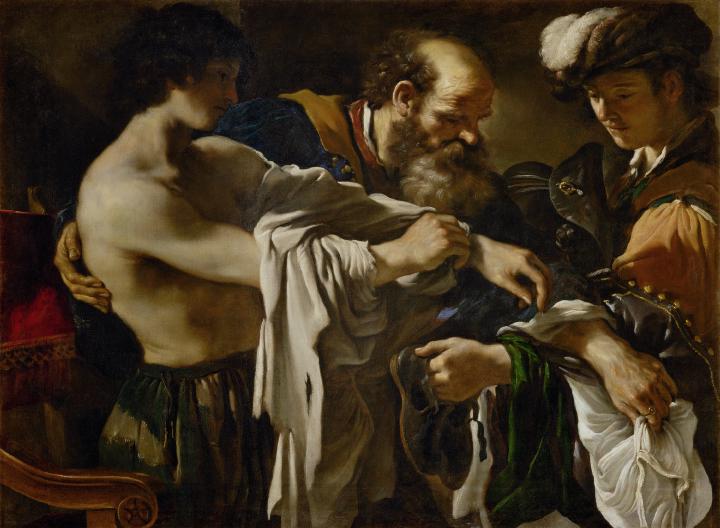
When I first heard about the Prodigal Son, I was fascinated by how the West treats the young and their relation with God and the community. In India, we don’t particularly rejoice for young people—especially if they act out of their caste’s dharma.
I got curious and I read the source for this story. I found the meta idea of it: the idea is that GOD LOVED YOU SO MUCH He allowed your will to be done on earth instead of His. He knew perfectly well that you would cause a mess of your life, yet because He so loved this son, He left him to his own will. One might think God is cruel for letting his son go astray, but the son’s own will led him to hell instead of paradise. He came back to the loving father, and the father was delighted. A big party was thrown on his arrival.
The beauty of this story, as I understand it, is that after the party, the servants get paid—but the son is not paid. Why? Because he has come to take DOMINION of the father’s kingdom. It is his responsibility, not his JOB.
One can clearly understand what happens here: if the son followed the father’s will without just expecting a reward, it would redeem him and make the world realize heaven on earth. This idea makes a person more responsible—for himself, for God, and for society. The person feels valued. They feel welcomed and highly regarded for their stance.
The story reminds us that everything in the world feels like it’s messed up and can’t be fixed. But that is only true if a person abandons their social responsibility because they think they won’t be rewarded for it. I found this idea so interesting because in India, if a person is suffering, people think the root cause is their Karma—an inability to follow Dharma in a previous life.
I never understood the logic of “what goes around comes around” as a circle. Life is linear. We live through stuff and it is done; you cannot go back. You are accountable for the thing. The problem I have with the Karma concept is that it is very cruel on the individual. It does not inform the unfair life one might have now as a servant—it only says your redemption is to serve and accept the reality as it is. I find it very manipulative. I see no love and no justice in it.
This explains why the “Go with the flow” or “Why do I care? It’s their job” attitude is so damaging. This idea feels like a servant having a CONTRACT and not a COVENANT with GOD. When you realize you are an heir, you stop asking “What do I get?” and you start asking “WHAT DO I OWN?”
In the West, the youth are under God’s Covenant. There is hope and a call to action instead of just fearing to break the rules or ending up in jail.
Why did I feel such a rush to write this?
I think we have to take responsibility for fixing things. We are the children of GOD. Because of His love and kindness, we are left to do our own will—which right now is neither bringing out the best of us nor acting as a good force on earth. But GOD is loving and merciful. He wants you to return to Him. He wants you to take your place and establish your DOMINION. Be the force that changes the world.
You are the prodigal son in whom GOD believes!